

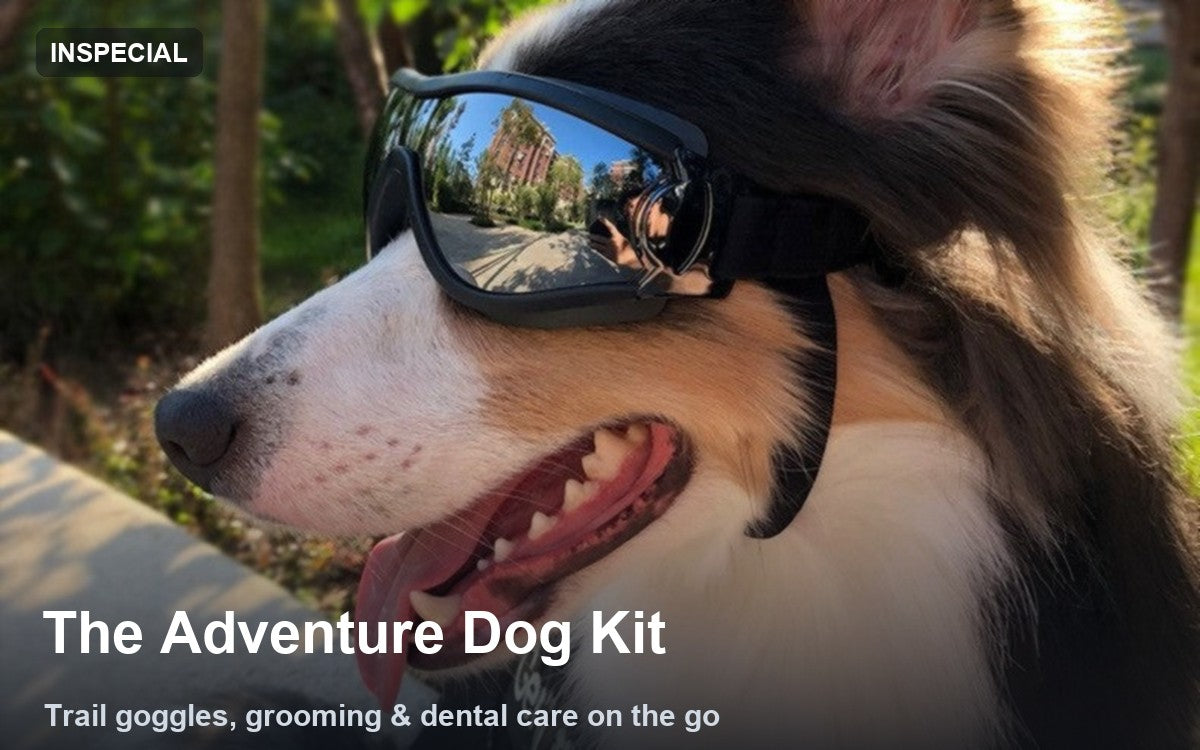
There's a difference between a dog that stays home and a dog that comes along. The second one earns trail dust, river water, hours of wind in the face, and a schedule that no longer matches the groomer's. Most owners are prepared for the first dog. Very few are prepared for the second — until the squinting starts, the nails click on the floor again, and the breath becomes a problem nobody planned for.
This is the kit for the dog that comes along. These are the 3 items in INSPECIAL's People with pet companions collection, ordered by how quickly each one stops being optional.
1. Eye Protection: The Trail Is Harder on Eyes Than the Sofa Is
Dogs don't blink the way we do at glare. On water, snow, sand or a long gravel descent, they simply keep going — and the consequences arrive later as squinting, watering, or a reluctance to look into bright light. Add wind at speed, dust on dry trails, and the low branches of a forest path, and eyes take a beating that a home dog never experiences.
Anti-UV Dog Goggles
The Anti-UV Dog Goggles – UV Protection & Waterproof Pet Gear are built for exactly that exposure. UV-filtering lenses cut the glare that water and snow reflect upward, the sealed frame keeps wind and dust out of the eye, and the waterproof construction means a swim or a downpour doesn't end their usefulness. Adjustable straps hold them in place through running and shaking — which is the real test, because a pair of goggles that falls off at the first head-shake is a pair your dog leaves in the car.
Two practical notes from people who use them: introduce them at home for a few short sessions with treats, so the trail isn't the first time your dog wears them; and use them in the car too — a dog with its head out of the window is collecting dust and insects at speed, and goggles solve that more cheaply than any trip to the vet does.
Best for: hiking, beaches and snow, boat and car travel, and any flat-faced or light-eyed dog that squints in bright sun.

2. Grooming on the Road: Between Groomer Visits
An adventure dog's nails don't care about your calendar. Trail miles wear them unevenly rather than shorter — and overgrown nails change how a dog's paw strikes the ground, which is how a long hike turns into a limp. At home, most owners put off nail care because the dog hates the clippers and everyone dreads the quick.
Electric Nail Trimmer for Pet Cats & Dogs
The Electric Nail Trimmer for Pet Cats and Dogs replaces the clip-and-cringe routine with a quiet rotating grind. That matters for two reasons: grinding removes small amounts at a time, so you stop well before the quick instead of finding it the hard way; and the low noise and vibration mean a nervous dog tolerates it far better than the snap of clippers. Short sessions — one or two nails, a treat, repeat — work better than one long battle, and after a week most dogs simply lie down for it.
For a travel kit it earns its place by being small enough to live in the same bag as the leads and the towels, so trail weeks don't end with a dog whose nails click on the kitchen floor.
3. Dental Care: The Problem That Arrives Quietly
Dental disease is the most common issue vets see in adult dogs, and it starts with plaque nobody can see. By the time the breath announces it, tartar is already established — and a full descale means anaesthesia, which means cost and risk that every owner would rather avoid.
Pet Ultrasonic Dental Scaler
The Pet Ultrasonic Dental Scaler for Removing Tartar is the between-visits tool. Ultrasonic vibration breaks down tartar on the visible surfaces of the teeth without the scraping that makes dogs object to traditional tools, and the IPX7 waterproof housing means it rinses clean under the tap after use. Used for a couple of minutes a few times a week, it slows the buildup that turns into next year's vet bill.
Be honest about what it is: a maintenance tool, not a treatment. It handles the tartar you can see on the front surfaces, and it's most effective when you start before the buildup is heavy. Anything at or below the gumline, or any signs of pain, bleeding or a broken tooth, belongs with your vet — this keeps the gaps between professional visits longer, it doesn't replace them.
The Adventure Dog Kit, In Order
- Before the trail: goggles on, checked for fit, first wear done at home.
- After the trail: paws checked, coat shaken out, eyes rinsed if it was dusty.
- Weekly: a two-minute nail session with the trimmer — short, calm, rewarded.
- Twice a week: a couple of minutes with the dental scaler on the visible teeth.
None of this is complicated. It's just the difference between a dog that comes along for years and one whose adventures get quietly shorter — and the gear is cheaper than the vet visits it prevents.
Shop the Collection
All three products come from INSPECIAL's People with pet companions collection — rugged gear and care tools for the person whose best friend has four legs and a wagging tail. Browse the collection and build the kit around where your dog actually goes.
Share:
The Recovery Timeline: What to Do in the 72 Hours After Training
How to Layer Bohemian Jewelry: Evil Eye, Necklaces & Rings