

Chronic sleep deprivation is rarely a discipline problem. It's usually mechanical: you wake up because your neck is at the wrong angle, you can't fall back asleep because your brain won't switch off, and by mid-afternoon you're so tired that the nap you take ruins the night ahead.
That's a loop with three specific breakpoints — your neck, your nap, and your wind-down audio. Fix all three with the right equipment and you're not relying on willpower any more. Here's how, using the 3 items in INSPECIAL's Sleep deprived people collection.
1. The Neck Problem: Why You Wake at 3am
Most "I sleep badly" complaints start with posture. A pillow that's too high, too flat or too soft leaves the cervical spine out of alignment for seven hours. The result is a stiff neck in the morning, pressure points that wake you mid-night, and a sleeper who turns over dozens of times without reaching deep sleep.
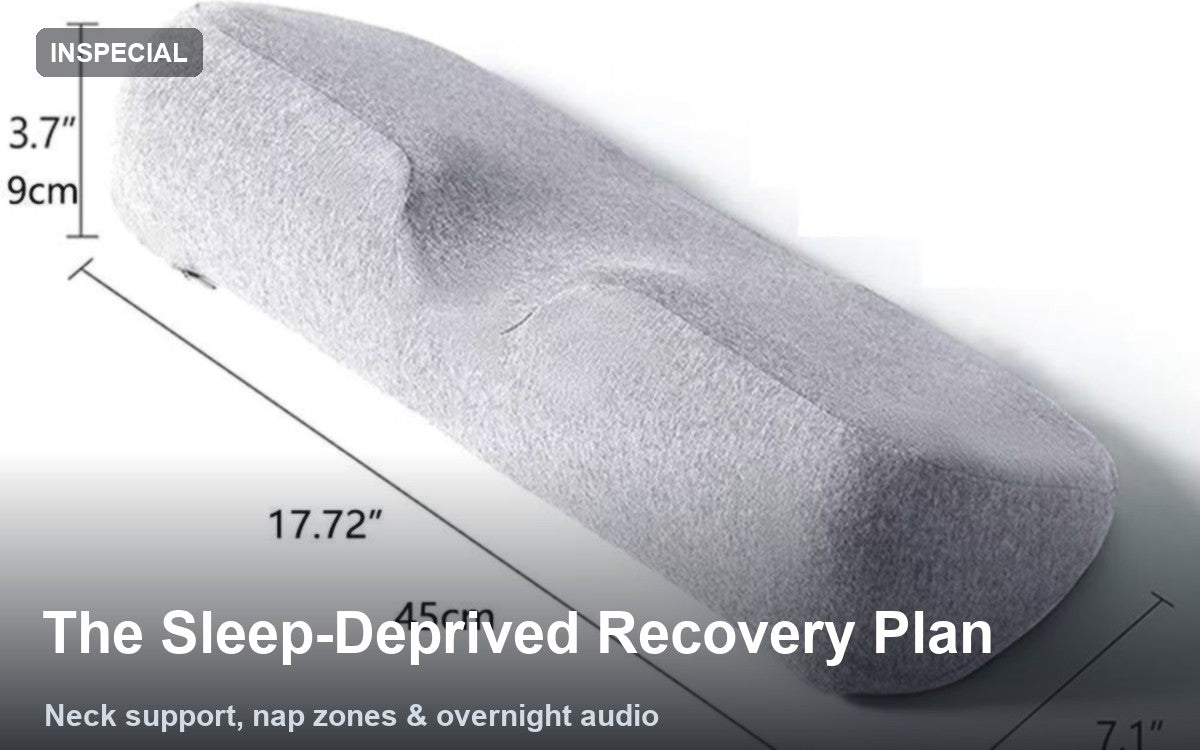
U-Shape Memory Foam Cervical Pillow
The U-Shape Memory Foam Cervical Pillow with Slow Rebound – Neck Support is designed around exactly this failure. The U-shape cradles the neck and holds the head in neutral alignment, and the slow-rebound memory foam adapts to your shape instead of pushing back against it. That slow rebound is the detail that matters: fast-spring foam bounces your head away the moment you move, while slow-rebound keeps supporting as you shift.
Give it a week. If you wake with less neck tension and fewer turn-overs, you've found the first breakpoint.
2. The Nap Problem: A Bad Nap Costs You the Night
Naps are not optional when you're sleep-deprived — but an uncomfortable nap is worse than none. Thirty minutes twisted on a sofa creates stiffness and doesn't reach the restorative stages, which leaves you groggy and pushes your sleep pressure to the wrong end of the day.
Computer Chair & Lazy Sofa Chair for Naps
The Computer Chair Lazy Sofa Chair for Naps at Home solves the two-mode problem: a structured, upright seat for desk work and a reclining, cushioned form that supports a genuine 20–30 minute nap. The reclined position is the important part. Napping upright keeps your airway slightly compressed and your neck unsupported; reclining with proper support lets you fall into light sleep quickly and wake without the twisted-neck penalty.
Practical protocol: 20–30 minutes, before 3pm, in a reclined rather than a curled position. Any longer, and you're trading tonight's sleep for this afternoon's.

3. The Wind-Down Problem: Fall Asleep and Stay There
Two things reliably interrupt sleep: a racing mind at bedtime, and being woken by audio or discomfort in the night. Both are solvable with the right kind of headphones — and the key word is right kind. In-ear buds are the wrong tool: they seal the canal, build pressure, fall out when you turn over, and make it hard to hear an alarm or a child.
True Bone-Conduction Bluetooth Headphones with Ultra-Long Battery
The True Bone-conduction Bluetooth Headphones with Ultra-Long Battery Life sit outside the ear entirely, transmitting sound through the cheekbone. For sleep and wind-down use that means three practical wins:
- Side-sleeping comfort. Nothing is inside your ear, so lying on your side doesn't hurt or dislodge anything.
- You still hear the room. An alarm, a monitor, a door — open ears keep you a functional adult, not a sealed sleeper.
- Overnight battery. The ultra-long battery is what makes them usable for falling asleep to an audiobook or a sleep podcast without waking at 2am to silence.
Use them for a 30-minute wind-down playlist, a guided breathing track, or a low-volume audiobook. The goal isn't entertainment — it's giving your brain something neutral to hold so it stops rehearsing tomorrow.
The Three-Week Reset
- Week 1 — Fix the neck. Switch to a cervical-support pillow. Note how many times you wake.
- Week 2 — Fix the nap. Move to a reclined, 20–30 minute, pre-3pm nap in a proper chair.
- Week 3 — Fix the wind-down. Open-ear audio and a fixed 30-minute pre-bed routine, no screens.
None of these are dramatic. Together they attack the three things that actually break sleep — and unlike a supplement, they keep working every night.
Shop the Collection
All three items come from INSPECIAL's Sleep deprived people collection — support, nap and audio gear chosen for people who need to reclaim their rest. Browse the collection and start with the breakpoint that's costing you the most.
Share:
Emergency Preparedness Checklist: Shelter, Power, Sanitation & Medical Gear for Real Readiness
Wearable Tech Meets Everyday Style: The Tech-Savvy Woman's Daily Kit