

Almost nobody quits a weight-loss routine because they lack motivation. They quit because of friction. The equipment is loud and they have neighbours. Their knees ache two days in. The room is too hot and the session becomes miserable at minute twelve. Every one of those is a small, solvable problem — and if you solve them in month one, month two looks after itself.
This is a first-month setup, not a home gym. These are the 3 items in INSPECIAL's Weight Loss Beginners collection, used in the order you'd actually need them.
Week 1: Pick One Machine, Not A Room Full
The classic beginner mistake is buying everything at once — a rack, a bench, a set of dumbbells — and then discovering you have no routine to hang them on. What you need in the first month is a single piece of equipment that is (a) hard to justify avoiding, (b) quiet enough to use at 7am, and (c) small enough to live where you can see it.
Quiet Multi-Purpose Abdominal Trainer
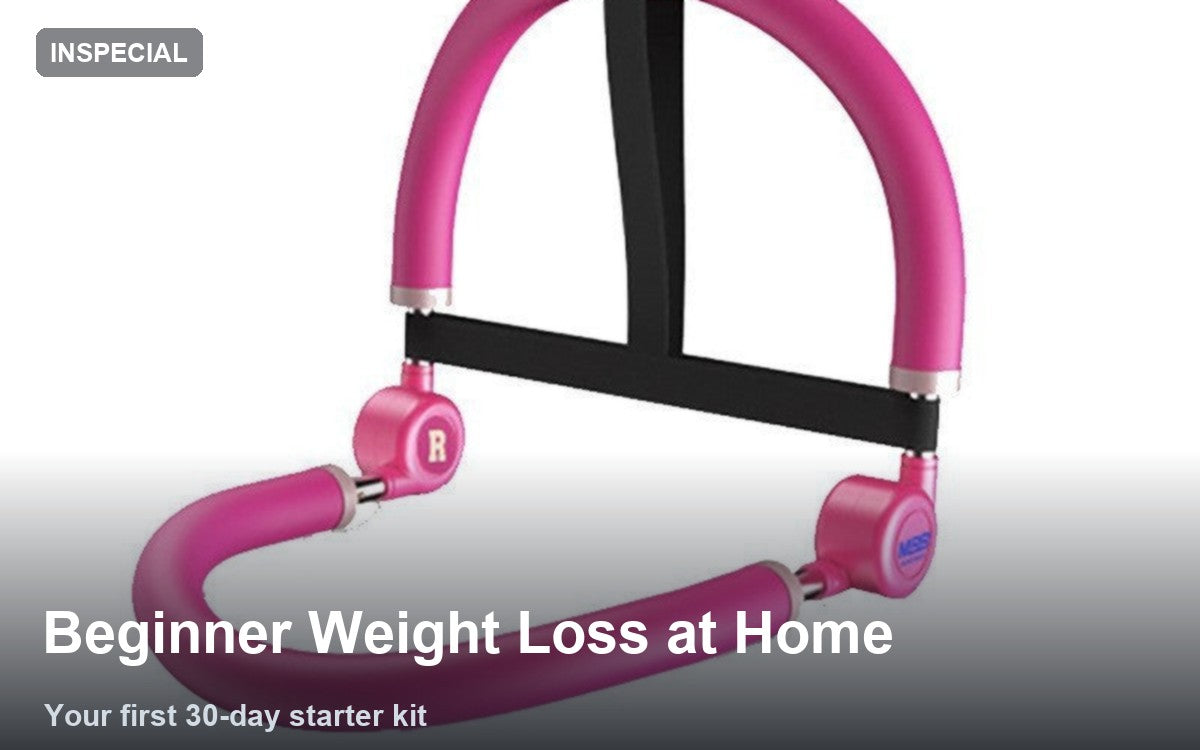
The Quiet Multi-Purpose Abdominal Trainer for Home Cardio Workouts – Compact Core Exercise Machine fits that brief almost exactly. It combines interval-style cardio with core resistance in one compact frame, which matters for a beginner because the two things you're actually building in month one are a habit and a baseline — not a physique.
Two details worth calling out for beginners specifically:
- Low-impact and quiet. No jumping, no floor-shaking, no complaint from downstairs. The most common reason home routines die in week two is simply the noise.
- It lives in the room. Because it's compact and low-profile, it can sit beside a sofa or bed. Equipment you have to unpack is equipment you skip.
A realistic beginner session: 10–15 minutes, three days a week, in the first fortnight. Consistency beats duration, and it isn't close.
Also worth knowing: it comes in 5 colours — a small thing, but gear you like looking at gets used more often.
Week 2: Protect The Joints That Carry The New Load
Here's the pattern that catches almost every beginner: your muscles adapt faster than your joints do. You feel capable by day ten, you push a little harder, and your knees register the increase before your legs have earned it. That's the point at which a starter routine becomes a two-week layoff.
Pressurized Sports Patellar Band Knee Pads
The Pressurized Sports Patellar Band Knee Pads are the cheapest insurance in this kit. The patellar band applies targeted pressure just below the kneecap, which supports the patellar tendon — the structure that complains first when a previously sedentary body starts loading its knees several times a week. The bidirectional adjustment means you can set the tension yourself rather than accepting whatever a fixed strap gives you.
For a beginner the rule is simple: wear them for sessions where your knees are doing the work — squats, lunges, anything on a machine that drives through the legs — and during the first weeks when the volume is new. They're small, washable and easy to leave in the kit so you don't have to think about it.

Week 3: Remove The Reason You Stop Mid-Session
Beginners don't usually stop training between sessions. They stop in the middle of one — because they're uncomfortably hot, sweat is running into their eyes, and the session has stopped feeling like a good idea.
Cooling Sports Towel
The Cooling Sports Towel – Quick-Dry, Ice-Cold Fabric does two jobs: it absorbs sweat, and the ice-cold fabric actively pulls heat off the skin it touches. Unlike a normal towel, which becomes a warm damp weight within a few minutes, it keeps working for the length of a session. Draped across the neck between intervals it drops your perceived temperature fast — and perceived temperature is what decides whether you finish minute twenty.
Keep it damp and cold in the fridge before a session. It's the least expensive thing in this collection and, for a beginner, disproportionately the one that keeps the routine alive.
The 30-Day Build Order
- Weeks 1–2 — Habit. One machine, 10–15 minutes, 3 days a week. Don't add anything. Just show up.
- Weeks 2–3 — Protection. Add knee support for leg-driven sessions before you increase duration or resistance.
- Weeks 3–4 — Comfort. Cooling towel in the session so heat stops being the thing that ends it early.
- Week 5 — Progression. Now extend to 20–25 minutes or add a fourth day. Not before.
What To Skip In Month One
- Scales and mirrors as your only feedback. Early changes show up in how a session feels and how you sleep long before they show anywhere else. Use consistency as the metric for the first month.
- Daily weigh-ins. Day-to-day fluctuation is mostly water and tells you nothing useful. Weekly, same time, same conditions.
- Anything that hurts. Muscle effort is expected. Sharp joint pain is information — stop, and get it looked at if it persists. This kit supports comfort and joint care; it doesn't replace medical advice.
Month one has one job: still be training in month two. Everything after that gets easier because you're no longer starting.
Shop the Collection
All three items come from INSPECIAL's Weight Loss Beginners collection — beginner-friendly equipment chosen so the first step needs no gym membership and no complicated setup. Browse the collection and start with the machine.
Share:
AI Smart Glasses: Translation, POV Capture & Hands-Free Audio
The Recovery Timeline: What to Do in the 72 Hours After Training